
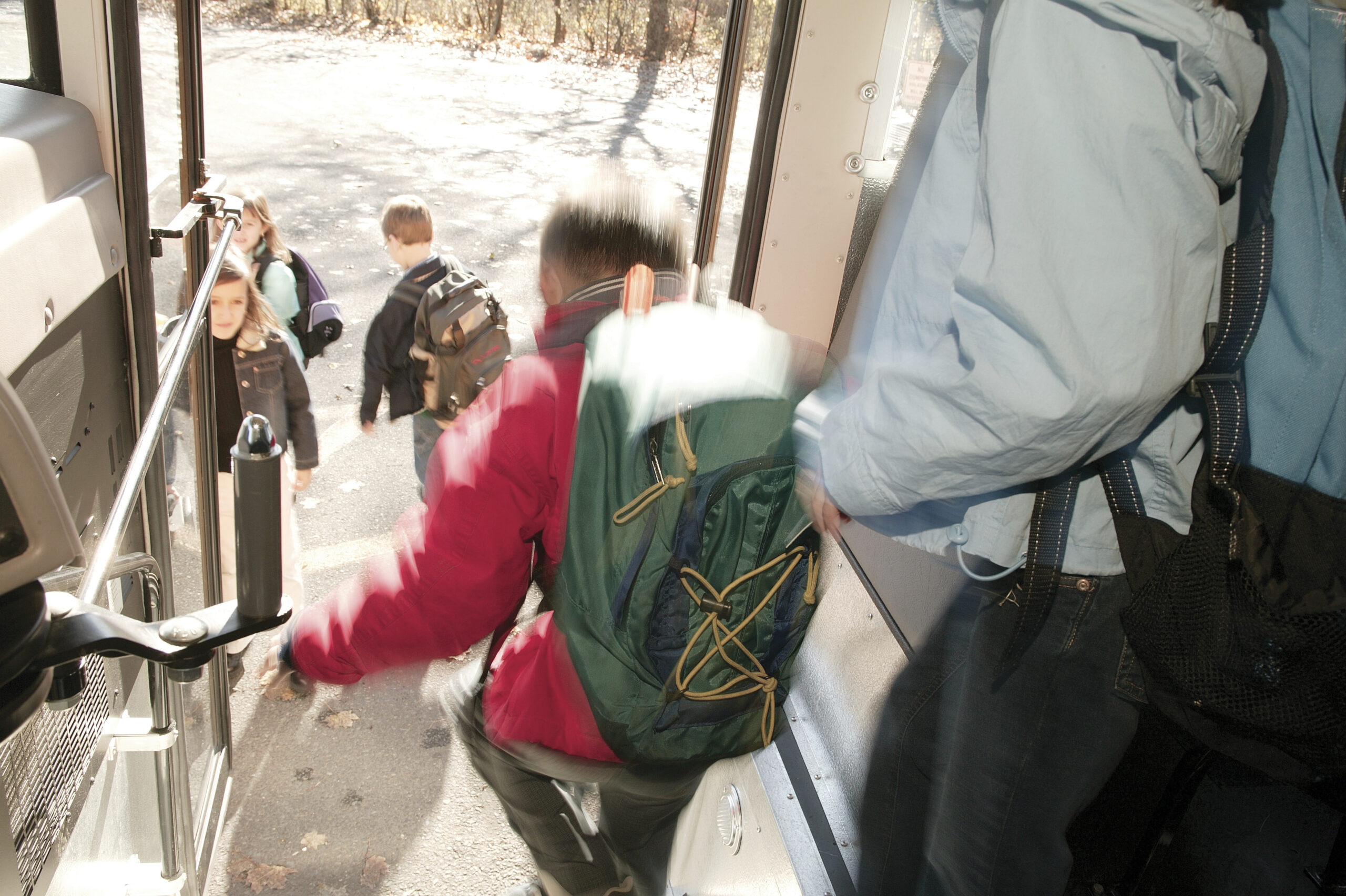
 Foto av Comstock på Freeimages.com.
Children’s mobility in a digitalised transport system
Children and their mobility form an important part of the transport system. Every day, children travel to school and to and from various leisure activities—sometimes on their own, sometimes accompanied by parents or friends. The ongoing digitalisation of the transport system is increasingly shaping children’s everyday mobility.
Together with research colleagues Jens Alm and Kristina Larsson, Linnea Eriksson from VTI has conducted a literature review of existing research examining how digitalisation influences children’s daily travel and mobility patterns.
“Children often find it easy to understand digital systems, but they do not always have access to them. The digitalisation of public transport, for example, assumes that children have access to a smartphone and digital payment systems in order to travel independently,” says Linnea Eriksson.
Studies investigating children’s independent mobility show that views on when children can move around on their own—beyond the home and school environment—vary considerably across different parts of the world.
“The notion of the autonomous child, able to travel independently, is generally seen by adults as something desirable. However, the age at which parents consider their children capable of using public transport or cycling on their own differs greatly between, for example, North America and Europe,” explains Linnea Eriksson.
The literature review shows that research conducted so far on how digitalisation affects children’s mobility often adopts a technology-optimistic perspective, focusing on how technology can address parents’ needs rather than those of children themselves.
“When children are consulted, they often express more traditional preferences—such as the need for safer infrastructure for walking and cycling to school—rather than asking for additional digital tools. Children also tend to reflect more on the traffic environment itself and the risks it may pose, while parents tend to worry that children travelling alone might encounter threats from other people,” Linnea Eriksson notes.
Eriksson also points out that there can be a substantial difference between physical and digital independence. Children’s smartphones can both enhance independent mobility and serve as tools for monitoring and control.
The introduction of school choice reforms in Sweden has meant that more children and young people now travel relatively long distances to school, making them increasingly dependent on public transport in their daily lives.
“Our impression is that children’s perspectives need to be strengthened in regional transport planning. We are therefore developing methods that can include children’s views at a strategic planning level, ensuring that their needs are incorporated early in the decision-making process,” says Linnea Eriksson.
The review of existing research on how digitalisation of the transport system affects children is summarised in the K2 report:
Litteraturöversikt: barns tillgänglighet och mobilitet i ett digitaliserat transportsystem (pdf, in Swedish).
Text: Hanna Holm