
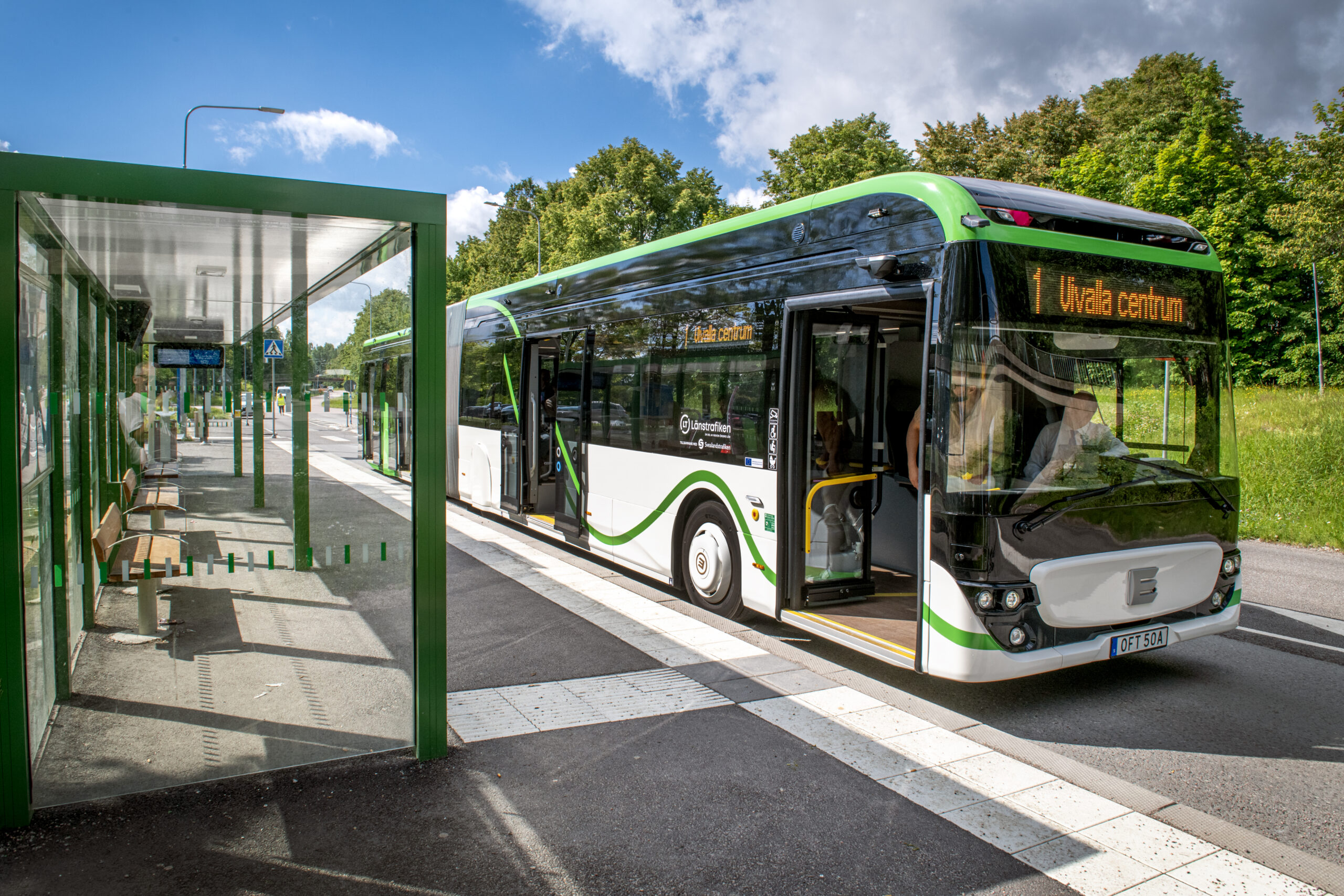
 Photo: Region Örebro län/Länstrafiken.
Different understandings of what BRT is complicate implementation processes
In a new dissertation, Jakob Allansson, a doctoral student at LTH and K2, has examined the collaboration challenges that may arise during the planning and implementation processes for high-quality bus solutions, with a focus on Bus Rapid Transit (BRT). He has also analysed how media resistance to BRT and similar solutions can be understood.
“It is clear that there are major challenges in the collaboration processes, as the organisations responsible have different mandates, objectives and areas of responsibility, and these sometimes conflict with one another. In addition, it is important to understand what protests and resistance are based on in order to better work with acceptance of sustainable transport,” he says.
The dissertation consists of four studies, in which Jakob Allansson has sought to answer which collaboration challenges may arise during the planning and implementation processes, why they arise and how they have been managed, as well as how those who oppose high-quality bus solutions understand these projects and what it is they object to.
Collaboration challenges more the rule than the exception
The results show that collaboration challenges are common—such challenges were identified in all the cases studied—and that they can arise at different stages of the planning process. These may range from challenges in formulating project goals and drafting memoranda of understanding, to dealing with the placement of bus lanes, speed bumps, or issues of identity and the colour of buses.
“It is clear that there are differing ideas and views on what high-quality bus solutions entail among the organisations involved. It is therefore important, through dialogue between all concerned parties at an early stage of planning, to work towards a shared idea and vision for the project, in order to create an understanding of each other’s perspectives and manage any goal conflicts as early as possible,” says Jakob Allansson.
To support this, together with his research colleagues Joel Hansson and Fredrik Pettersson-Löfstedt, he has developed a planning tool for Swedish BRT that can be used to create a shared understanding of levels of ambition and the measures required to achieve them.
Few but outspoken voices
Regarding protests and resistance to the establishment of BRT, in this case in Örebro, the analysis of what has been published in local media shows that sceptics primarily use arguments based on fairness and efficiency. Arguments put forward include that investments are being made where public transport already exists while it is lacking in rural areas; that the expected effects will not be as significant as estimated; and that the resources for the planned investment should be allocated to other parts of municipal activity. The analysis also shows a distrust of the investigations and calculations underlying investment decisions, and that the technocratic arguments often used to justify BRT investments do not convince opponents. However, despite the appearance in the media of strong opposition to the project studied, with a predominance of negative articles, the results also show that a small number of individuals appear repeatedly in the debate.
Jakob Allansson emphasises the importance of understanding the results in their context and that findings from one project do not automatically mean that the same issues will arise in the next.
When it comes to resistance, similar lines of argument can be found in other transition projects, including those related to fuel policies.
“This shows that issues of fairness and perceived benefits are central when it comes to resistance,” he says.
Link to the Thesis:
Planning for high-quality bus services – K2
Text: Anna Maria Erling