
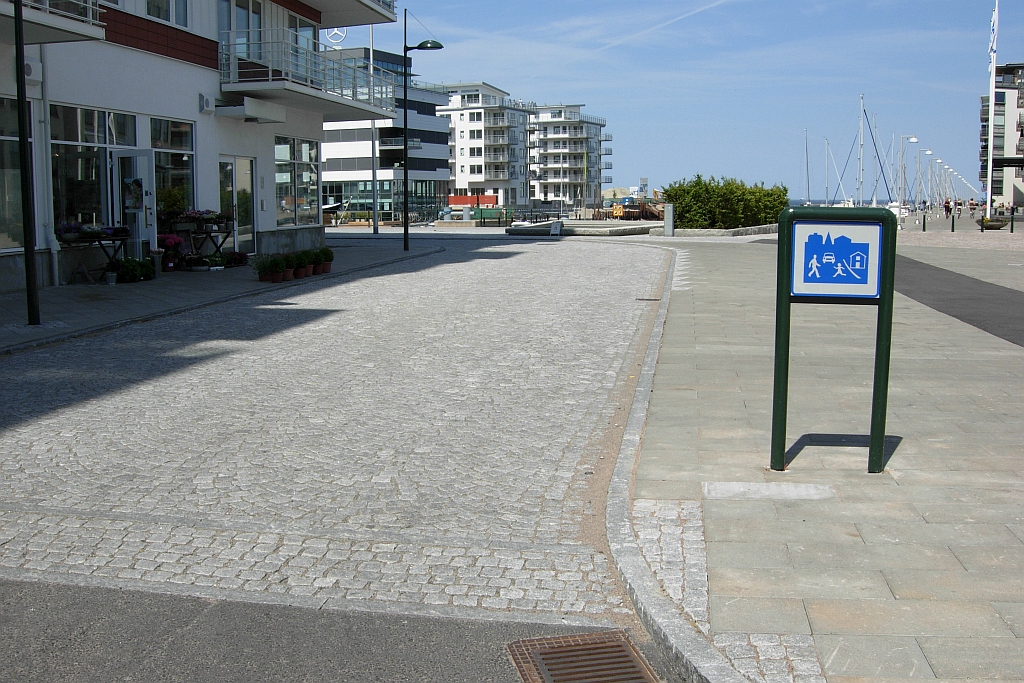
 Isbergs gata in Malmö. Photo: Allan Akbar/Wikipedia.
Politicians’ views on car-restrictive measures are shaped by their self-image in relation to voters
Reduced driving with fossil-fuelled cars is, as is well known, important for a sustainable transition. However, for many politicians, car-restrictive measures are a sensitive issue, partly due to the risk of losing voter support. K2 researcher Robert Hrelja therefore calls for a less black-and-white public debate on the issue.
Robert Hrelja, a researcher at Malmö University and K2, has in a study examined how politicians in Sweden, Norway and Spain view car-restrictive measures—whether such restrictions should be used in the transition of the transport system and, if so, how they should be implemented.
“Such measures are potentially controversial and can lead to protests from citizens. At the same time, they are very important for enabling a transition to take place,” he says.
The aim of the qualitative study was to gain a deeper understanding of how politicians reason about the issue, as there has been relatively little research in this area.
“It is surprising, given the important role of politicians. Researchers often express views on how the green transition should be carried out, but without knowing how politicians reason and why they make the decisions they do. Researchers sometimes criticise politicians and argue that they should make different decisions. Now we can gain a greater understanding of how they may think.”
Major differences between politicians
The results of the study show—unsurprisingly—major differences between politicians from different parties and ideologies. The latter influences how politicians view whether car-restrictive measures should be used at all, how they should be applied if introduced, and the pace at which a transition should be carried out. The latter concerns how quickly such measures should be implemented and how great a risk politicians are willing to take in terms of voter support.
The study also shows that politicians’ attitudes towards car-restrictive measures are influenced by how they see themselves in relation to their voters.
“Politicians who see themselves as representatives of their voters, and who believe that car-restrictive measures are not something voters support, tend not to favour such measures. Politicians who instead believe that it is part of their role to drive societal change are more open to car-restrictive measures, even if this may risk voter support,” says Robert Hrelja.
Calls for a less black-and-white debate
He calls for greater knowledge and a more informed debate about politicians’ roles and positions in relation to a sustainable transition.
“Often the debate and what researchers express becomes a bit too black-and-white, without a deeper understanding of the conditions that exist in municipalities and how politicians reason. It is a little too easy for a researcher to say that a politician is wrong if they do not want to implement restrictions on car traffic.”
He argues that opposition to car-restrictive measures becomes more understandable when ideology and politicians’ views on what their voters want from societal development are taken into account.
“One can still argue that transport planning in municipalities should favour walking, cycling and public transport more. But with greater knowledge, it is possible to have a more informed discussion about how a green transition can best be achieved within the political conditions that exist,” he says.
Link to the article:
Understanding politicians’ positions about the role of car restrictive measures in sustainable transitions – ScienceDirect
Text: Anna Maria Erling