
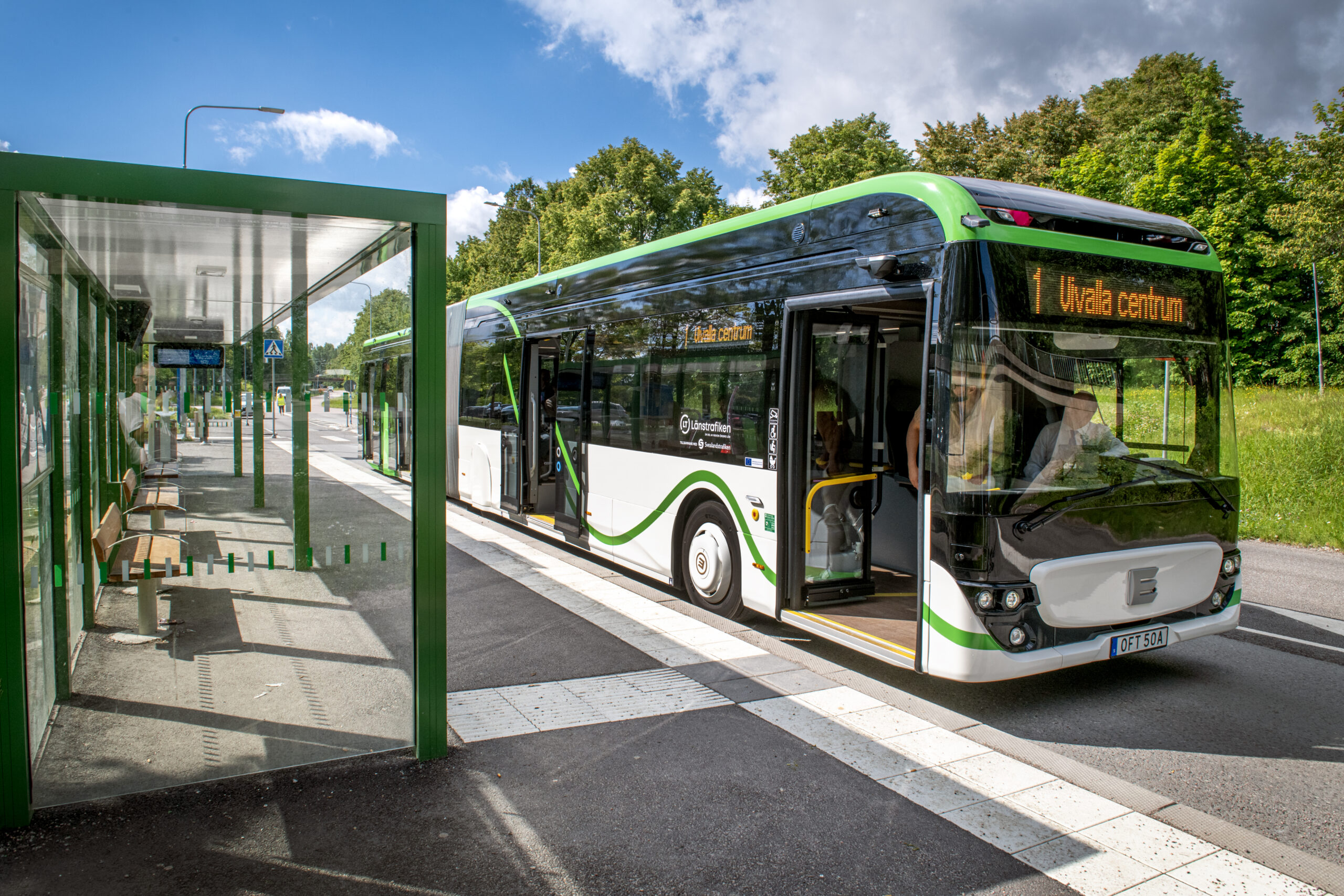
 Photo: Region Örebro län/Länstrafiken.
Introduction of new solutions in public transport – reactions to the BRT project in Örebro
When public transport or other infrastructure that affects people’s everyday lives is changed, it is not unusual for local resistance to emerge. The protests may concern perceived injustice or reflect distrust of authorities and decision-makers. Resistance can, however, appear more widespread than it actually is, as a relatively small group can have a large influence on the local debate.
Jakob Allansson, doctoral student at Lund University and K2, studies the implementation of Bus Rapid Transit (BRT) and how BRT projects are received by travellers and local opinion. In a scientific article, he analyses the media debate ahead of the introduction of BRT in Örebro.
“Local protests against transition projects, such as infrastructure or policy changes, are not unusual at all. The protests may concern perceived injustice or inefficiency, but also a lack of trust in authorities and decision-makers, and of course ideological differences. The resistance in Örebro was, however, unusually forceful and organised,” says Jakob Allansson.
Jakob Allansson has studied how the introduction of BRT was debated in the local newspaper Nerikes Allehanda, where as many as 235 articles, opinion pieces, editorials and letters to the editor on the project were published between 2019 and 2022. The majority of articles were negative towards the project, 68 articles were positive, while only 28 reflected both positive and negative aspects of the project.
“It is not obvious that the resistance is as widespread as it may first appear. In Örebro, it was a relatively small group that drove the local debate and repeatedly wrote in the local newspaper,” says Jakob Allansson.
Focus on the municipality
The debate about the BRT project in Örebro focused on the municipality’s resources, rather than the region’s or the public transport authority’s priorities. The project, however, seems to have had limited impact on the 2022 election results, as the distribution of seats in Örebro’s municipal council changed only marginally.
“There may be every reason to listen to those who protest; they may have points that are important to include in a change project. For the dialogue with citizens to be truly meaningful, however, it must take place early, before major investments have been made and a solution has been locked in that is difficult to reverse. Opponents of changes do not seem particularly receptive to overly technocratic arguments about efficiency and the like. It may instead be better to emphasise issues such as reducing negative impacts on the climate or creating a more equitable transport system,” argues Jakob Allansson.
During the spring of 2026, Jakob will complete his doctoral thesis Planning for High-quality bus services – Understanding collaborative challenges and public resistance, with the defence scheduled for April.
The article is published in the journal Urban Transitions.
Text: Hanna Holm