
 Bild: Mostphotos.
Major changes ahead in collective mobility
Collective mobility is facing major and transformative changes over the next five years. This is according to a new K2 report produced by Elias Arnestrand, innovation leader, and Karolina Pamp, an independent expert in mobility and foresight methodology. The authors highlight three trends in particular that will influence the sector going forward.
The first trend has been given the name “The system collision – when super-fast technology meets traditional administration”. What it concerns is a clash between agile commercial companies that exploit the latest technology for business models and mobility, and a public, system-heavy traditional public transport administration.
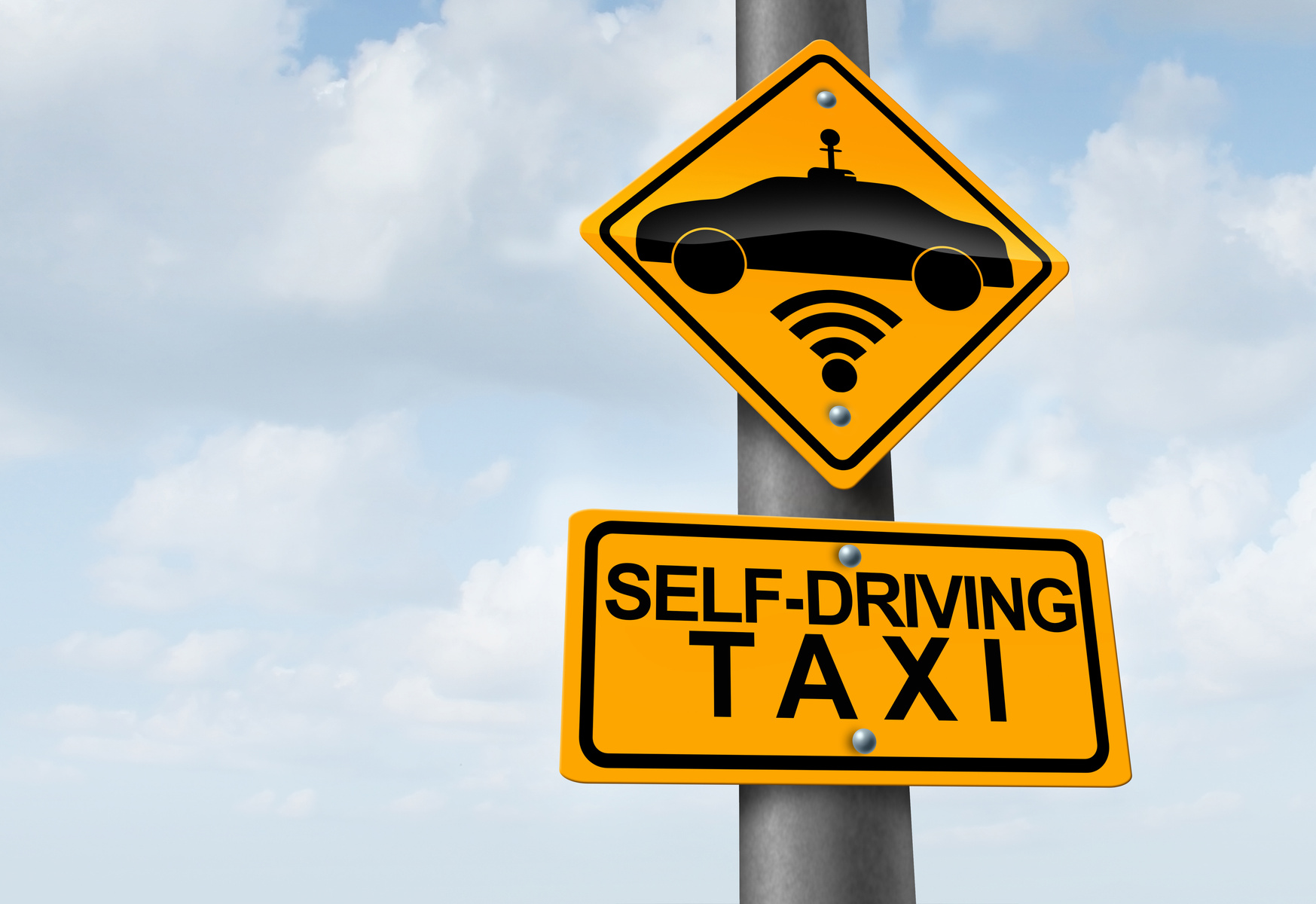
New vehicle types and sharing services are entering from the sidelines, often driven by global companies outside the traditional industry, and are challenging existing structures. What happens, for example, when robotaxis are introduced in Europe next year?
The authors point to the danger of stagnation at a time when people’s demands for personalised services are increasing. Travel today is about more than mere movement – how you get around signals both identity and status, and today’s travellers are active consumers who make “preference-based choices comparable to how they consume media or food”. If traditional public transport is perceived as rigid, cumbersome and outdated, travellers choose other options, the authors write.
Public actors are urged to learn how to collaborate with global players such as Waymo and Uber in order to keep up. At the same time, transport authorities need to strengthen their competence in digital business development and data analysis, as more and more is centred on data and digitalisation. The central question in the years ahead will be who owns the customer relationship, the data, and thereby the ability to shape the future, the authors argue. They also urge the 21 independent regions to unite at national level in order to meet global technological developments.
Stability becomes more important than sustainability
The second trend is called “Agenda Resilience – when the green argument is no longer enough”. As private car use becomes electrified, the argument of travelling collectively for the sake of the climate has lost some of its legitimacy. The new raison d’être for public transport will instead be reliability and robustness, the authors argue – which places entirely new demands. Public transport has long been designed according to “just-in-time” principles, where redundancy has been cut away. This results in poor resilience when crisis hits and public transport is expected to carry the load. “To be relevant in this new context, public transport must offer a stability that private motoring cannot match,” they write. This in turn requires a new way of viewing investments, accepting the costs of preparedness.
Part of this is that buses, trains and depots should also be viewed as strategic assets in total defence. This entails concrete requirements such as dual-use capacities – for instance that a bus can quickly be converted into an ambulance or medical transport – and that procurements must include requirements for stockpiling spare parts and fuel.
A fragmented world with public transport as the social glue
The third trend is based on a society that is pulling apart and has been given the headline “The fragmented reality – when the social glue is tested in a polarised world”. We are living in a “multi-polarised” era with increasing economic disparities, larger divides between urban and rural areas, and digital filter bubbles that reinforce different values and lifestyles. “The result is a country pulling apart, where the conditions for living and working look radically different depending on one’s profession and where one lives,” the authors write.
Today’s young people are growing up as parallel “Greta and Bianca” generations; they express deep concern for the climate in line with Greta Thunberg’s message, while simultaneously adopting a consumption-driven lifestyle inspired by influencers such as Bianca Ingrosso. In this climate, public transport receives an unexpected role as a form of social glue – one of the few arenas where people actually meet physically. At the same time, the risk of so-called transport poverty is increasing, especially in sparsely populated areas and areas with a weak supply. The consequence is a limited labour market and social isolation for vulnerable groups. The challenge is to balance innovation for urban, digitally savvy groups (“Bianca consumers”) with a justice perspective and basic accessibility for those with the greatest needs, even where it is not commercially viable. Future mobility must therefore be viewed as a central part of building a democratic society, the authors argue.
This article is based on the report by Elias Arnestrand and Karolina Pamp.
The entire report can be read here:
Framtidens kollektiva mobilitet – en trendspaning (PDF, new tab) (In Swedish)
Text: Anna Maria Erling